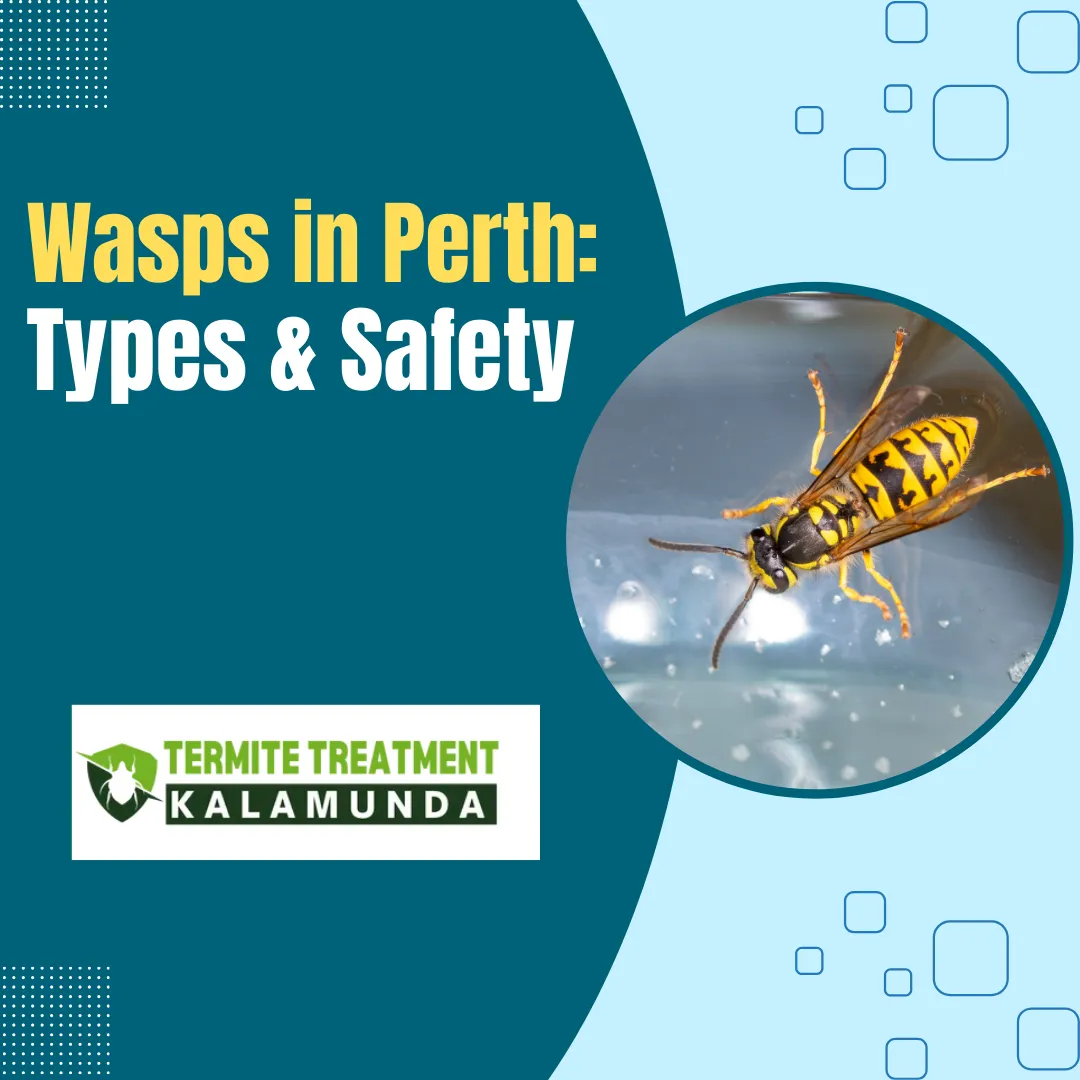
Wasps in Perth, Australia: Types, Habits, and Safety Tips
Australia has a great variety of wasps, each with their own characteristics and roles in ecosystems. Wasps are common in suburbs, gardens and the woodlands around Perth. Knowing the types, activity, and when they can become dangerous is important to avoid any harm to you and keep a balance in nature.
1. Paper Wasps
Paper hornets are long, thin, yellowish or reddish insects. They are 16–20 mm long with relatively long legs and antennae.
Nesting: Construct papery nests out of chewed plant fibres and saliva, frequently under eaves, on fences or tree branches.
Diet: Paper wasps prey on spiders and insects, which they obtain to provision their larvae.
Behaviour: These wasps will only sting in defence, and are non-aggressive if not disturbed. They are key predators of garden insect pests.
2. European Wasps
European wasps (Vespula germanica) are medium-sized, 12–15 mm, and have bright yellow and black striped bodies. They are one of the most aggressive wasps in Australia.
Nesting: The nests of European wasps are made of a papery material and may be found in wall cavities, hollow trees or underground.
Diet: Omnivores, eating nectar, fruit and insects.
Dangers: They are painful to sting and, in sensitive individuals, can cause anaphylactic symptoms. Controlling European wasps in urban Perth is crucial in order to lessen stings and infestations.
3. Mud Dauber Wasps
Mud daubers are thread-waisted wasps, shiny and black with yellow markings, about 25 mm in length. They are solitary and helpful bees.
Nesting: Mud daubers create tubular nests out of mud in protected sites such as under eaves or in attics.
Food: Adults take nectar, while the larval prey on paralysed spiders given by the female.
Pros: These wasps assist in regulating spider numbers and are usually not aggressive towards people.
4. Sand Wasps
Sand wasps are yellow and black (or black and white, or with bands of pale green). They are slim with a very narrow waist and body.
Nesting: They excavate burrows in sandy soil for laying eggs and caching prey.
Diet: Sand wasps forage for flies, beetles and other small arthropods.
Behaviour: They are not aggressive; they only sting when disturbed. Sand wasps are an important pollinator and provide natural pest control.
Wasp Safety and First Aid
Stay calm when stung and avoid sudden movements.
Clean the area with soap and water to prevent infection.
Apply a cold compress to reduce swelling and pain.
Use topical treatments like hydrocortisone cream or calamine lotion.
Seek medical attention if a severe allergic reaction occurs.
Natural Wasp Remedies
Peppermint oil or vinegar sprays to repel wasps.
Citrus peels placed near common nesting areas.
Cinnamon or essential oil traps to deter wasps naturally.
Soap and water solutions for direct application on nests.
For severe infestations, professional pest control services are recommended to safely remove nests and manage aggressive species like European wasps.
For expert wasp control in Perth, contact Ace Termite Treatment Kalamunda. We provide safe removal, inspections, and pest management for homes and businesses. Call 08 6275 6540 or visit acetermitetreatment.com for professional assistance.
